
Introduction
For new parents, along with the new happiness at home, many decisions also come — and one of the common questions among them is: “Should you put your baby in a walker?“
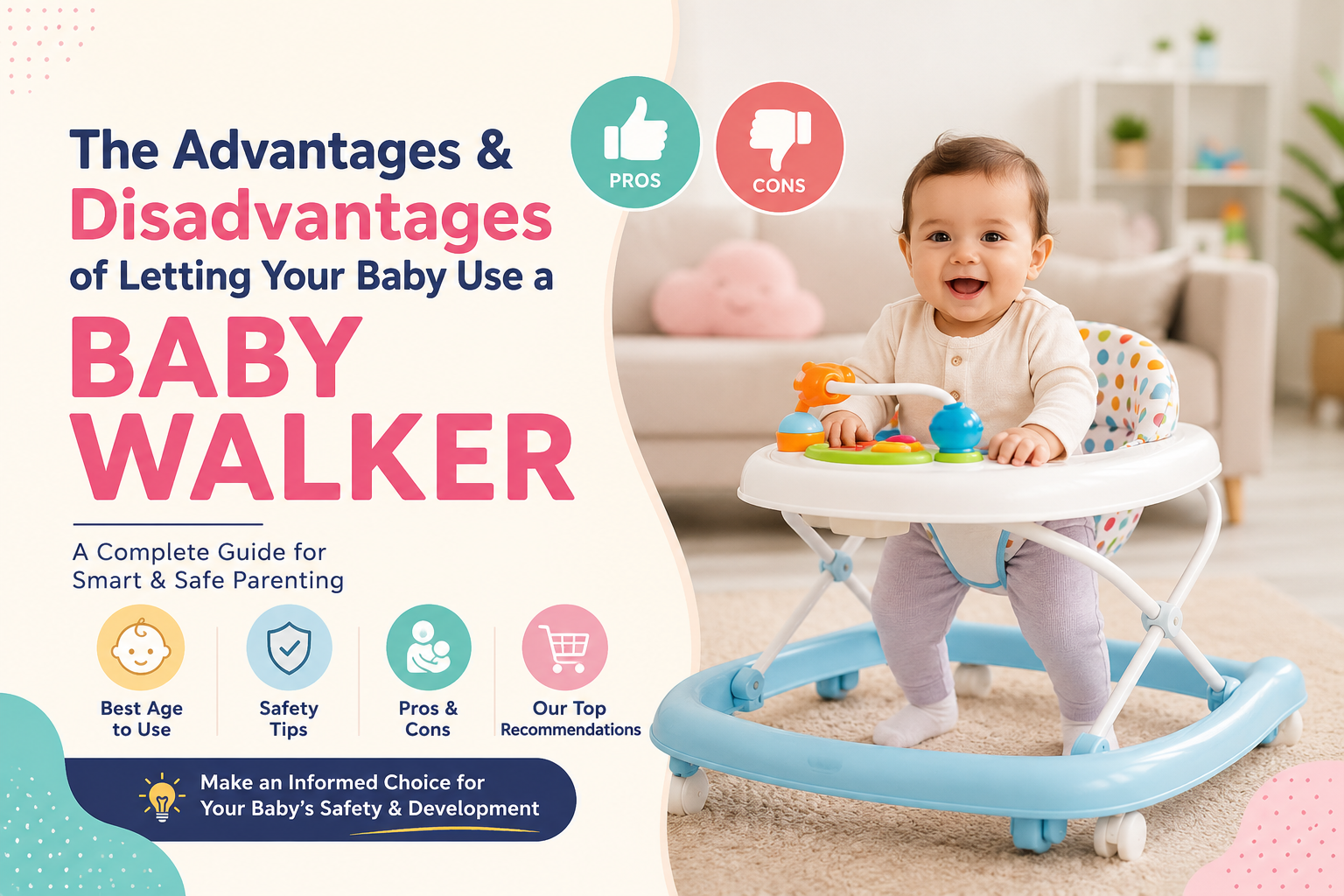
A baby walker is basically a wheeled device in which the baby is placed safely in a padded seat, and they can freely move around by placing their feet on the ground and pushing themselves. It is specially made for babies who are still learning to walk.
In India, this is a very common confusion — grandma says, “Put the baby in a walker, they will walk sooner,” while a friend says, “The doctor advised against it.” Today, we will honestly look at both sides so that you can make an informed decision.
If you are making a newborn shopping list, then definitely read our guide “Baby Essentials Every New Parent Needs” — you will find more useful things there for new parents.
The Best Age to Use a Baby Walker
Ideal Age Range
A baby walker is generally used between 6 and 12 months of age. By this age, the baby’s neck and back muscles have developed enough for them to sit safely in a supported seat. Before this — especially under 4 months — putting a baby in a walker is not safe.
Developmental Readiness Signs
Look for these signs in your baby first:
- Can hold their head up without support
- Can sit for a short time
- Tries to push with their feet when placed on the ground
Why Starting Too Early Is Not Right?
If the baby’s muscles are not ready yet, early walker use can put unnecessary stress on the spine and hips. A walker is a support tool — not a replacement for the baby’s natural growth.
Advantages of Using a Baby Walker
Now let’s talk about the genuine benefits of a baby walker — there are benefits, and it is not right to ignore them.
Entertainment and Engagement
Nowadays, baby walkers come with colorful toys, music, and activity panels. The baby stays entertained for quite some time and is mentally stimulated as well. Exploring a new environment helps their curiosity and cognitive development.
Encourages Movement and Exploration
While sitting in a walker, the baby can move around on their own — this is the first small feeling of independence! Exploring new surfaces and objects can be helpful for their sensory development.
Parents Get Some Hands-Free Time
A new parent often does not even get time to drink a cup of tea during the day — this is true! A baby walker can help in those moments when you need 10–15 minutes to work in the kitchen. But this is a supervised break — never leave the baby alone.
Builds Confidence in the Baby
By moving independently in a walker, some babies feel very happy. This small sense of achievement can also be positive for their emotional development.
Personal Recommendation: A baby walker is most useful when used for a limited time in a safe environment — on a flat floor and when you are nearby. Treat it like a helper, not like a crutch.
Disadvantages of Using a Baby Walker
Now let’s come to some serious concerns — which are genuinely important to know.
Safety Risks Are the Biggest Concern
The American Academy of Pediatrics (AAP) has officially discouraged baby walkers. In India, homes often have uneven floors, stairs, and sharp furniture corners — all of these can become dangerous for a baby once they gain speed in a walker.
It May Delay Natural Walking Development
This is the most surprising point — a baby walker does not make a baby walk sooner; sometimes it can actually delay walking! In a walker, babies move in an unnatural toe-walking posture, which does not allow walking muscles to develop properly. Multiple studies have confirmed this.
Stairs and Furniture — Double Danger
A baby in a walker can reach stairs in a second or crash into sharp-cornered furniture with full force. Serious cases of head injuries and fractures have occurred because of just one moment of inattention.
Crawling Can Be Skipped
Some babies become so used to walkers that they resist moving on the floor. Crawling — which is a very important milestone for brain development and body coordination — can be skipped.
Pediatric Experts’ Advice: Most pediatricians recommend that baby walker use should not exceed 20–30 minutes per day and should always be under direct supervision.
Our Baby Walker Recommendations
If you decide to buy a walker, make sure to check these features:
- Sturdy Frame: It should be strong and stable — do a wobble test in the store
- Safety Locks / Brakes: The wheels should be able to lock — a very useful feature
- Adjustable Height: The height should adjust as the baby grows
- Comfortable Padded Seat: Breathable and soft material — the baby can sit comfortably for a longer time
- Easy-to-Clean Cover: Removable, washable seat cover — a real lifesaver for new parents!
Buying Tip: Do not just buy the cheapest option. Before buying a second-hand walker, properly inspect the frame, wheels, and safety locks — a torn seat or loose wheels are immediate red flags.
Baby Walker Safety Tips Every Parent Should Know Before Use
| Safety Tip | Why It Matters |
|---|---|
| Always supervise | Never leave the baby alone in a walker, even for a minute. |
| Use only on a flat, even surface | Avoid carpets, uneven floors, or outdoor surfaces that may increase the risk of accidents. |
| Keep away from stairs | Installing a stair gate is compulsory to prevent serious falls. |
| Limit sessions to 20–30 minutes | Spending too much time in a baby walker may not be ideal for posture and natural movement development. |
| Regularly inspect the walker | Check for loose screws, damaged wheels, or cracked parts and replace immediately if needed. |
| Follow the manufacturer’s age and weight limits | This is seriously important for your baby’s safety and proper use of the walker. |
Conclusion
So in the end. Should you use a baby walker. Not. The honest answer is that a baby walker can be a thing but only when you use it wisely and safely and for a short time. It is not something that will magically make a baby walk sooner. If a baby uses it much it can actually slow down their natural development.When to use a baby walker: when the baby is old enough like six months or more and you are watching them and they are on a floor and it is just for a little while.
When to avoid a baby walker: if your house has stairs that’re not safe or the baby is still getting stronger or you cannot watch them. Remember. A baby walker is something to help it is not a way to make parenting easier. Every baby grows at their speed and some babies walk just fine without a baby walker. And that is totally okay.
Being patient and loving with your baby is way more important, than using a baby walker. You are doing a job, new parents.
Related Read: Baby Essrentials Evey New Parent Needs in 2026